The Jab and Cross in Muay Thai: Mechanics, Uses and Mistakes
Punches are the least valued strikes in traditional Muay Thai scoring and the most thrown in every beginner class. Both facts are true, and neither is a reason to skip them. The jab and cross are how you measure distance, how you make an opponent lift their guard before you kick the body, and how you cover the space between kicking range and the clinch. This guide covers the mechanics of both, the ways Muay Thai punching differs from boxing, and what to fix first.
Written for orthodox (left foot forward). Mirror for southpaw.
The jab
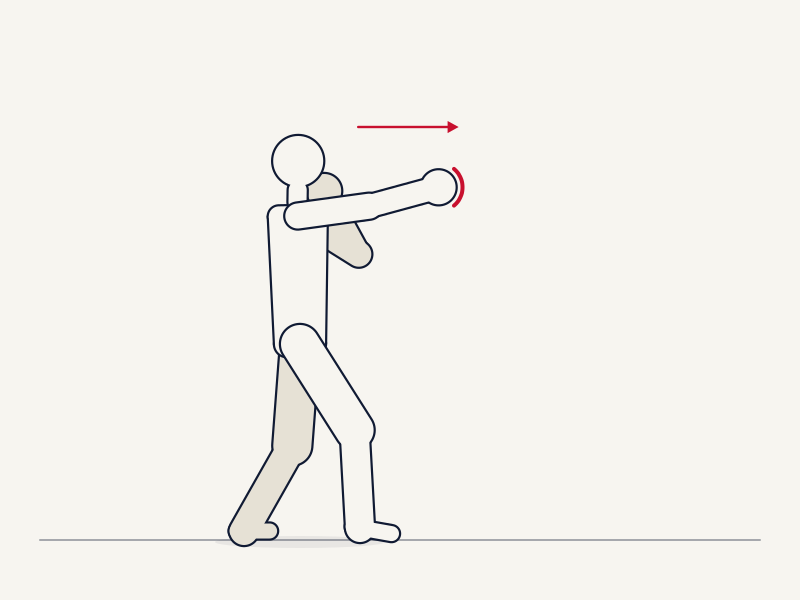
The jab is the lead-hand straight punch. In Muay Thai it does three jobs: it finds range, it interrupts, and it hides the kick behind it.
1. Start in the guard. Hands up, elbows in, chin down. The jab leaves from the guard and returns to it along the same line.
2. Extend the arm straight. No wind-up, no dropping the hand first. The fist travels in a line from your cheek to the target. Turn the fist palm-down as it lands so the first two knuckles make contact.
3. Push the lead shoulder forward. The shoulder rises slightly to cover the chin. The rear hand stays on the head; it does not drop to the chest to "balance" the punch.
4. Step if you need range. A small lead-foot step as the punch goes, rear foot sliding after. The punch and the step land together.
5. Snap it back. The hand returns along the same line as fast as it went out. A jab that hangs in the air is a jab someone kicks under.
Keep the jab loose. Tension in the shoulder slows it and tires you. Power comes from the snap and the step, not from squeezing the fist for the whole journey.
The cross
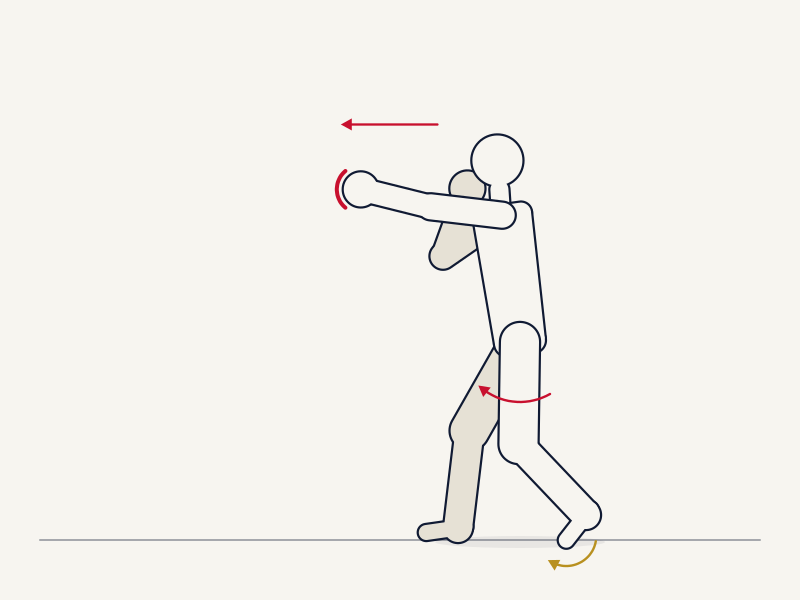
The cross is the rear-hand straight punch. It's the power punch of the pair because it's driven by the hips.
1. Start in the guard. Same as the jab.
2. Pivot the rear foot. The rear heel lifts and turns outward, as if crushing something under the ball of the foot. This starts the hip turn.
3. Turn the hips and shoulders. The rear hip drives forward and around, the rear shoulder follows, and the arm extends straight as the shoulders rotate. The fist turns palm-down at the end. The chain is foot, hip, shoulder, fist, in that order.
4. Keep the lead hand on your face. The most common beginner error: the lead hand drops as the cross goes. Your chin is now open to a counter hook or a high kick.
5. Return and reset. The cross comes back to the guard and the hips return to square. Don't stay turned; a turned stance can't check a kick with the lead leg.
The cross's range is slightly longer than the jab's because of the rotation. If you're missing, you're probably too far away; step in with the jab first.
How Muay Thai punching differs from boxing
- The stance is squarer. So the cross has less rotation to work with than a boxer's. Thai fighters compensate by stepping into it or throwing it with a small forward lean.
- You stay upright. Boxers slip and roll under punches; that head movement puts your face at knee height. In Muay Thai, defence to punches is more about the guard, the long guard, footwork and the teep.
- Punches set up other weapons. The jab-cross exists mainly to make the opponent cover their head so your kick lands on the arms or body, or to close distance to the clinch.
- Scoring. Under traditional Thai judging, a punch mostly scores when it visibly affects the opponent: a stagger, a wobble, a knockdown. Under IFMA amateur rules a punch landed with force counts as a scoring technique like any other. See how Muay Thai is scored. Either way, punches that just touch don't win rounds.
- Gloves. Training and amateur gloves are bigger (16oz for UK sparring, 10oz in IFMA competition), which changes how tight the guard is. See what oz gloves for Muay Thai.
What the jab-cross sets up
The reason coaches drill "one-two-kick" from day one:
- Jab, cross, rear roundhouse. The cross turns the hips and puts weight on the lead leg; the rear leg is already loaded to kick. See the roundhouse kick.
- Jab, cross, lead teep. After the cross, the lead leg is light and the opponent is stepping in. The teep meets them. See the teep.
- Jab, cross, step in, clinch. The punches bring you inside; the hands go from punching to grabbing the head. See clinch basics.
- Jab, cross, elbow. Same range as the punches once the opponent's guard is closed. See elbows.
Drills
- Mirror jabs. Three minutes, jab only, watching the rear hand. If it moves, start again.
- Wall-touch cross. Stand a fist's length from a wall in stance and throw the cross so the knuckles just touch. Teaches straight-line extension without reaching.
- Jab-cross on pads with a rear kick. Have the holder call "kick" randomly after the cross. Teaches you to land the cross with the kick already loaded.
- Step-jab across the mats. Step and jab together, reset, repeat. Then step-jab-cross.
Common mistakes
- Dropping the non-punching hand. Both punches; both hands. The one that isn't punching is on your face.
- Winding up. Pulling the fist back before the punch. Telegraphs everything.
- Punching with the arm only. The cross without the foot pivot and hip turn is a slap.
- Leaning in. Weight over the front foot means you can't teep, check or move back.
- Overturning on the cross and staying turned. You've made a boxing stance and lost your lead-leg check.
- Throwing the jab as a push. Snap it. The hand returns as fast as it leaves.
- Chin up. Every strike, tucked.
Where to train this
Pads under a coach are where punches get fixed. Find a class in the UK gym directory or a longer stay at a training camp in Thailand.
Related guides
- Muay Thai stance and footwork
- The roundhouse kick
- The teep
- Elbows
- How to wrap your hands
- Best Muay Thai gloves in the UK
- Muay Thai vs kickboxing
FAQs
Should I learn boxing separately? It helps. Many UK Muay Thai fighters do boxing sessions to sharpen punches and footwork. Just keep the stance and head-movement differences in mind; slipping low in Muay Thai invites knees.
Why does my wrist hurt when I punch pads? Usually a bent wrist at impact, or loose wraps. Land with the fist in line with the forearm and the first two knuckles, and see how to wrap your hands.
Do punches score in Muay Thai? Yes, but under traditional Thai scoring a punch usually needs a visible effect to count much. Under IFMA amateur rules any punch landed with force scores. Ask which rules your fights use.
Should the jab be hard? Fast and accurate first. A quick jab that lands at range does its job of setting up the kick. Power comes later, from the step and the snap.