Muay Thai Stance and Footwork: The Base Everything Sits On
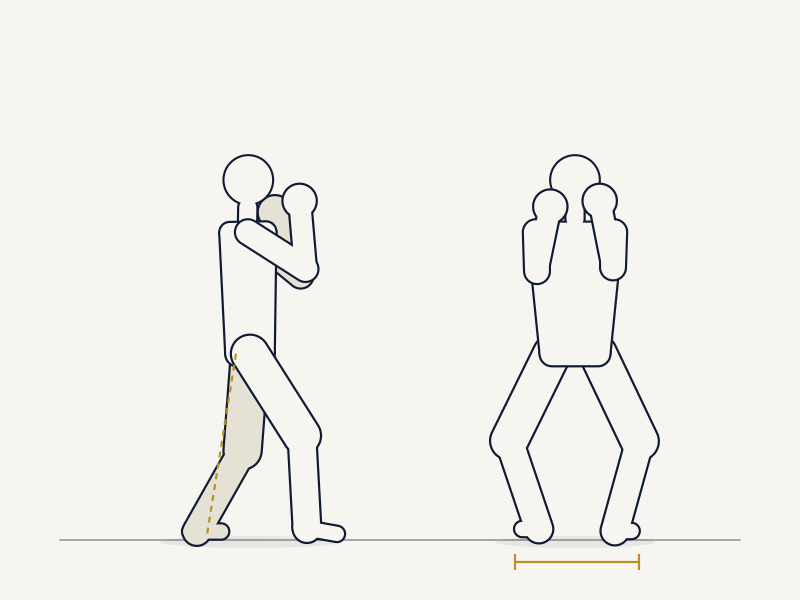
Every strike in Muay Thai starts from the stance and ends by returning to it. Get the stance wrong and your kicks are slow, your balance goes on every teep, and you eat counters because your hands are somewhere near your hips. Get it right and the rest of the sport becomes learnable. This guide covers the orthodox stance, the guard, how to move, and the drills that build it.
Terminology first: orthodox means left foot forward (most right-handers). Southpaw means right foot forward. Everything below is written for orthodox; mirror it if you're southpaw. If you're not sure which you are, put your stronger hand and stronger leg at the back. Your rear side is the power side.
Step 1: set your feet
- Stand with feet roughly shoulder width apart.
- Step the rear foot back so the feet are staggered, about a stride apart. Not a long fencing lunge; you should be able to lift either foot without shifting your weight first.
- Turn both feet slightly outward. The lead foot points roughly at your opponent, angled a touch to the outside. The rear foot is angled more, around 45 degrees.
- Bend the knees slightly. Locked knees can't move.
- Keep the rear heel light or lifted. Weight lives on the balls of the feet, split close to evenly between them. Coaches describe this as being "light" rather than "sitting" in the stance.
The Muay Thai stance is noticeably squarer to the opponent than a boxing stance. Boxers turn side-on to make a small target and load the rear hand. Thai boxers keep the hips more forward so that both knees, both legs and the rear kick are all live, and so that the lead leg can lift to check a kick without first having to unwind. Sean Fagan's stance breakdown calls this the biggest difference between the two stances, and it's the one boxers converting to Muay Thai take longest to accept.
Step 2: hips and shoulders
Hips face mostly forward, with a slight turn to the rear side. Shoulders relaxed, not shrugged. Chin tucked down towards the chest. Eyes on the opponent's chest and shoulders rather than their eyes or feet; you see everything with peripheral vision from there.
A cue that works for many beginners: imagine holding a coin under your chin. If you look up or lift the chin to see, the coin falls.
Step 3: the guard
High guard. Both hands up around eye level, palms facing slightly outward or towards each other, elbows in to cover the ribs. Forearms vertical. This is the default guard beginners are taught, and you return to it after every strike.
Long guard. The lead arm extends forward with the hand near the opponent's face or collarbone, the rear hand stays on the head. It creates a frame that stops an opponent walking in, and it's the guard you'll see Thai fighters use to control distance. Learn the high guard first; the long guard comes when you start partner work.
Whichever guard you're in, the elbows stay close to the body. Wide elbows leave the liver and ribs open to body kicks.
Step 4: moving
The rule that solves most footwork problems: move the foot nearest the direction first, then slide the other foot to restore the stance.
- Forward: lead foot steps, rear foot follows.
- Back: rear foot steps, lead foot follows.
- Left (orthodox): lead foot steps, rear follows.
- Right: rear foot steps, lead follows.
Steps are small. Big lunging steps put you off balance mid-step, which is exactly when a good opponent teeps you. Feet never cross; crossing your feet removes your ability to kick, check or move for the whole time your legs are tangled.
Angling off is the next layer. Step the lead foot forward and out at 45 degrees, then pivot on it so you end up beside your opponent rather than in front. It's the movement that sets up the roundhouse kick and lets you leave after landing.
Step 5: the Thai rhythm
Watch Thai fighters and you'll see a bounce: a light, alternating lift of each foot, often described as stepping as if the floor is hot. It keeps weight moving between the feet so that either leg can lift instantly to check or kick. Evolve's beginner footwork guide describes a related three-step pattern (yang sam khum) where the stance switches every third step. You don't need that on day one. You do need to stop standing flat-footed.
Four drills
- Lines. Across the mats: forward, back, left, right, keeping the stance the whole time. Then diagonals. Boring and essential.
- Angles. Step out 45 degrees on the lead foot, pivot, return to stance, repeat on the other side. Add a jab or a kick once the step is clean.
- Circle away. Step back, then circle laterally away from an imaginary opponent's power side (for orthodox, that means circling to your left, away from their right hand and right kick). Backing straight up puts you on the ropes.
- Shadow boxing. Three-minute rounds moving through all of the above with strikes attached. Film a round on your phone. You'll spot dropped hands and crossed feet you can't feel.
Common mistakes
- Standing side-on like a boxer. Your rear kick has to travel further and your lead leg can't check.
- Feet too narrow or too wide. Narrow and you're pushed over by a teep; wide and you can't lift a leg without a weight shift.
- Flat feet and locked knees. No bounce, no reaction time.
- Hands dropping when you kick. Swing the same-side arm down for balance if your coach teaches that, but the other hand stays on your head.
- Chin up. Tuck it. Every time.
- Crossing the feet when moving sideways.
- Leaning back to avoid strikes. It takes the chin out of range for one strike and puts you off balance for the next three.
Where to train this
Footwork improves fastest under a coach who can see your feet. Find a class in the UK gym directory or a longer stay at a Thai training camp.
Related guides
- Your first Muay Thai class: what to expect
- Jab and cross
- The roundhouse kick
- The teep
- Checking and blocking kicks
- Muay Thai vs kickboxing
FAQs
Should I stand orthodox or southpaw? Put your dominant side at the back unless a coach tells you otherwise. Some left-handers train orthodox for a stronger lead hand and kick, but that's a choice to make later, not in your first month.
Why do my calves hurt from just standing? Because you're on the balls of your feet with bent knees, which is new load for the calves. It fades in a couple of weeks. Stretch and keep training.
How long before the stance feels natural? Most people stop having to think about their feet after a few months of two or three sessions a week. Shadow boxing at home speeds this up more than anything else.
Is the Muay Thai stance the same as a kickboxing stance? Close, but Muay Thai stances are generally squarer and more upright because of the clinch, knees and the need to check kicks. Dutch-style kickboxing stances often sit between boxing and Thai.