Muay Thai Gym Etiquette and the Wai Kru: What the Unwritten Rules Are
On this page · 6 sections

Muay Thai gyms run on customs that nobody writes down. Some come from Thai culture, some from the practical business of a room full of people hitting each other safely. Break them and you won't be thrown out, but you'll mark yourself as someone who hasn't paid attention. This guide covers the everyday etiquette of a UK gym and then explains the wai kru ram muay, the pre-fight ritual you'll see on fight night and, in some gyms, at the start of class.
Everyday etiquette
1. Shoes off the mats. Always. Trainers, and the dirt on them, never touch the training surface. Flip-flops between the mats and the changing rooms or toilets. If you see someone step onto the mats in outdoor shoes, they're new.
2. Greet the coach. Many gyms use the wai: palms pressed together at chest or chin height with a small bow of the head. It's the standard Thai greeting and a sign of respect, not a religious act. Do it when you step onto the mats, when the coach comes to correct you, and at the end of class. If your gym doesn't wai, a handshake, fist bump or nod does the same job. Copy what the regulars do.
3. Address the coach the way the gym does. In Thailand a trainer is Kru (teacher) or, for senior coaches, Ajarn. Some UK gyms use these titles, some use first names. Listen and follow.
4. Be on time. Arriving late means walking through the warm-up and missing the safety brief. If you're unavoidably late, wait at the edge of the mats until the coach waves you in, then join without fuss.
5. Turn up clean. Short nails (fingers and toes), no jewellery, no watches, clean kit, and clean feet. Skin infections spread on mats. If you have an open cut, cover it; if you have ringworm or anything contagious, stay home and tell the coach.
6. Look after shared kit. Borrowed gloves and pads go back where they came from, strapped up. Don't sit or lean on the pads. Don't throw gloves across the room.
7. Hold pads properly. When you're holding for a partner, that's their round, not your rest. Brace the pads, meet the strike, and call the combination clearly. Half-hearted pad holding is one of the rudest things you can do in a gym.
8. Sparring manners. Match the intensity your partner is working at, or the level the coach set, never above it. Touch gloves at the start and end. If you catch someone harder than you meant to, acknowledge it. If you're getting hit too hard, say so or tell the coach. Nobody is impressed by a beginner who tries to knock out a training partner.
9. Don't coach other people unless the coach asks you to. Even when you're right. Especially when you're right.
10. Ask before you film. Some gyms are relaxed about phones, some ban them on the mats, and some members don't want to appear in your videos.
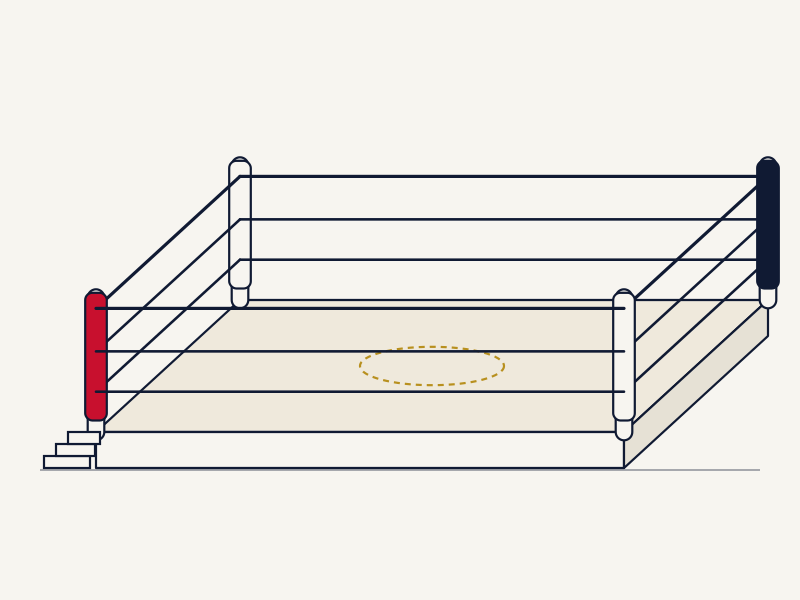
11. Respect the ring. In many gyms the ring is entered over the top rope by male fighters and under the bottom rope by everyone else in Thailand, a custom rooted in Thai beliefs about the head and the ring's blessing. UK gyms vary; some keep the custom, some ignore it. Ask if unsure, and never step on the ropes.
12. Line up at the end. Classes often finish with everyone facing the coach for a wai or bow. Wait for it before you leave the mats.
The wai kru ram muay
If you go to a Muay Thai show in the UK or watch fights from Thailand, you'll see each fighter, before the first bell, walk the ring and then perform a slow dance to live or recorded music. That is the wai kru ram muay.
The name breaks down as wai (the respectful greeting), kru (teacher), ram (dance) and muay (boxing). Together it's a ritual of respect: to the fighter's teacher and gym, to their parents and ancestors, and to the art itself. It's also, practically, a stretch and a way to settle the nerves before the bell.
What you'll see:
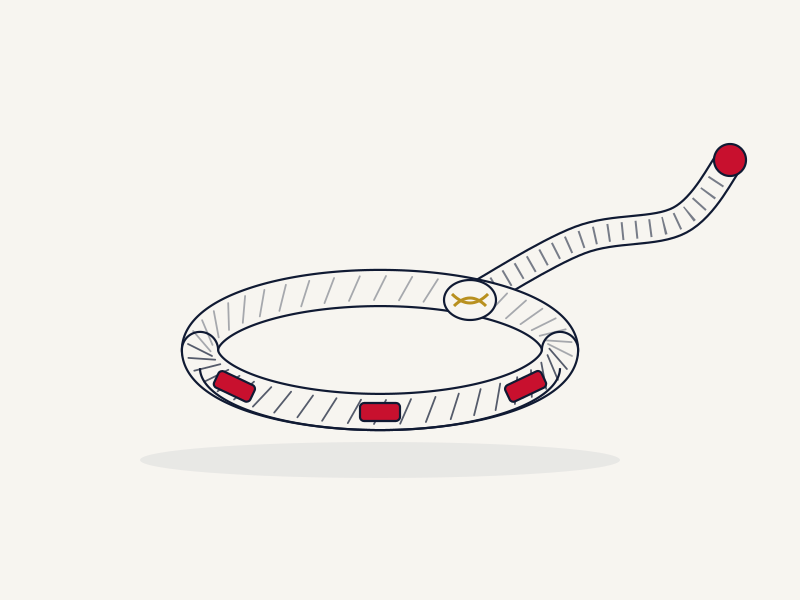
- The mongkhon. A braided headband placed on the fighter's head by the trainer before they enter the ring and removed by the trainer before the fight starts. It's treated with care and is not something a fighter puts on themselves.
- The prajiad. Armbands worn on one or both upper arms, which stay on during the fight.
- Sealing the ring. The fighter walks the ropes, usually anticlockwise, stopping at each corner to bow or touch the top rope. This is often described as sealing the ring against bad luck and marking it as the fighter's space.
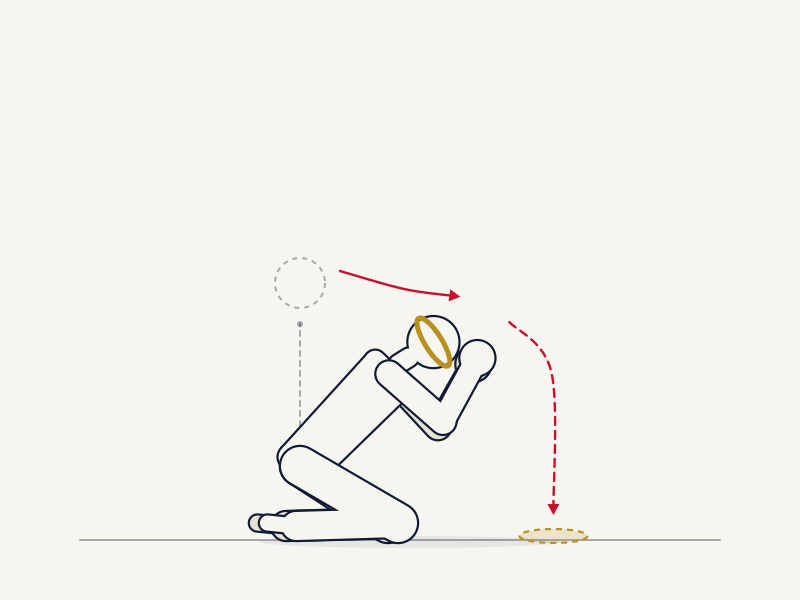
- The wai kru proper. Kneeling in the centre, the fighter bows to the mat three times, typically facing their own corner or the direction of their home gym. The three bows are commonly explained as respect to the teacher, to family and to the religion or the art.
- The ram muay. The standing dance. Movements vary by gym and region; some are said to be based on the monkey god Hanuman, some depict an archer or a hunter, and some are unique to a camp so that people who know can identify where a fighter trained. The music is the sarama, played on Thai oboe (pi chawa), drums and cymbals, and it continues through the fight.
Fighters from the same gym usually perform a similar ram muay, which is why it's sometimes described as a signature.
In the gym. You won't do a full ram muay in a beginners' class. Some gyms open or close sessions with a short group wai kru: a wai to the coach, sometimes kneeling, sometimes with a few bows. Follow the room. If you go on to fight, your coach will teach you your gym's version, and learning it properly is part of preparing for the bout. Fighters who rush or skip it are noticed.
For non-Thais. There's a reasonable question about whether a UK fighter should perform a Thai ritual. The consensus in the sport, including among Thai trainers, is yes: it's a mark of respect for the art you've chosen to compete in, and performing it badly is more disrespectful than performing it simply. Keep it short, keep it sincere, and let your coach shape it.
Common mistakes
- Walking on the mats in shoes. The number one offence.
- Treating the wai as awkward and skipping it. It takes one second and it's the local handshake.
- Putting your own mongkhon on or leaving it lying on the floor. Hand it to the trainer.
- Sparring above the agreed level. You'll be paired with someone who'll teach you why that was a mistake.
- Coaching your partner across the pads.
- Turning up ill or with an uncovered cut.
Where to train this
Every gym has its own house rules; ask on your first visit. Find one in the UK gym directory or, for the full-immersion version of all of the above, a training camp in Thailand.
Related guides
- Your first Muay Thai class: what to expect
- How to choose a gym
- From interclub to first fight
- How Muay Thai is scored
- Muay Thai for beginners in the UK: kit and costs
FAQs
Do I have to wai if I'm not Thai or not religious? No, but it's expected in gyms that use it, and it isn't a religious act. It's a greeting and a thank-you. Most people are comfortable with it within a session.
Is the wai kru compulsory before a fight? Under IFMA amateur rules and at Thai stadiums it's part of the event. Some UK shows and interclubs skip it or keep it short, especially at junior level. Ask your coach what the promotion expects.
What's the difference between the wai kru and the ram muay? The wai kru is the kneeling salute; the ram muay is the standing dance that follows. People often use "wai kru" to mean both.
Can I train while I have a cold? If it's a mild cold and you're not coughing on people, most coaches won't mind light work. If you're feverish, contagious or have a skin infection, stay away until it's cleared.