From Interclub to First Fight: The UK Muay Thai Competition Path

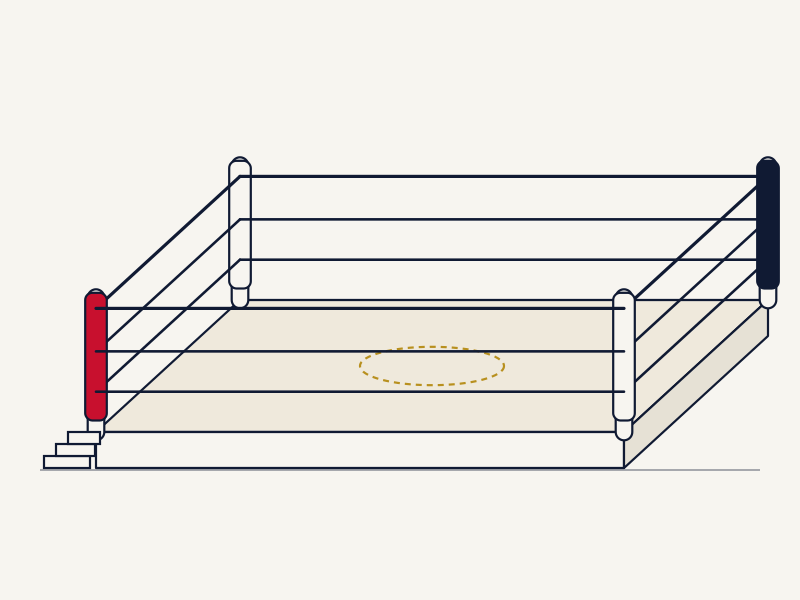
The UK has an unusually well-developed ladder from beginner to fighter, and its first rung is something most countries don't have: the interclub. It's a friendly, non-decision event where students from different gyms spar in a ring in front of a small crowd, with a referee, under rules that keep the contact controlled. Nobody wins, nobody loses, and it's the closest thing to a fight you can have without one. Above it sit novice and amateur bouts under a variety of promotions and rules, and above those the pro shows. This guide explains how the ladder works and what to expect at each step.
The UK has no single governing body for Muay Thai. Rules, licences and medical requirements vary by promoter and sanctioning organisation. Everything below is the common shape; your coach and the event's own rules override it.
Step 1: the interclub
What it is. A gym hosts, other gyms bring students, and everyone is matched by age, weight and experience for short bouts in a ring. It's about experience: the nerves, the ring, a stranger in front of you, a referee, a crowd.
Format. Typically three rounds of one to one-and-a-half minutes for adults, shorter for juniors. Bouts are usually non-decision: no winner is announced and the result is recorded as a draw. Some events also offer decision bouts for people ready for them.
Contact. Controlled. The emphasis is on skill, not power, and referees warn and then stop anyone who can't keep it light. Typical age rules at UK interclubs: no head contact for under-14s, light head contact with head guards for 14–16s, light and controlled contact for adults.
Rules commonly seen (they vary by host): no elbows, no knees to the head, no spinning techniques, no strikes to the back of the head or spine, limited clinch time, no throws or sweeps for beginners.
Kit. Bring your own: 14oz or 16oz gloves (juniors lighter), gum shield, shin guards, groin guard for men and boys, hand wraps, shorts. Some hosts supply head guards and body shields.
Entry. Almost always through your coach, who contacts the host with your name, age, weight and experience. There's usually a small entry fee, commonly around £10–£20, and spectators pay a few pounds. Weigh-in is on the day, in your kit, and your "walking around" weight is fine.
When are you ready? When your coach says so. A typical marker is a few months of consistent training including some light sparring, so you can keep your hands up and your composure when someone is hitting you. Interclubs are for exactly the people who aren't sure they're ready.
Step 2: what an interclub feels like
You'll wait for a while (events run two to four hours with bouts staggered), your coach will wrap your hands and warm you up, and then you'll be in a ring with someone you've never met, a referee, and your gym shouting at you. Three things happen to almost everyone:
- You forget everything for the first thirty seconds. Then it comes back.
- You gas out. Adrenaline burns the tank faster than any pad round. Breathe, teep, reset.
- You come out wanting to do it again. Or, occasionally, knowing that fighting isn't for you, which is also useful information and costs a tenner.
Do several. Fighters commonly do a handful of interclubs before their first bout, against different people, ideally including someone better than them.
Step 3: novice and amateur bouts
Once your coach thinks you're ready for a decision, you'll be matched on an amateur show. This is where the variety starts.
Rule sets you'll meet in the UK:
- Novice or "C class" rules. Often no elbows, sometimes no knees to the head, shin guards and sometimes head guards, shorter rounds. Designed as a first fight.
- Amateur full rules with pads. Elbows allowed with elbow pads, shin guards, head guards; usually close to IFMA's amateur framework, under which head guards, shin guards and elbow guards are mandatory and 10oz gloves are used in competition.
- Amateur "open" or "A class". Fewer pads, longer rounds, elbows allowed for experienced amateurs.
- Semi-pro / pro. No shin or head guards, full elbows, five rounds.
The promoter's fight agreement will state the rules. Read it.
Scoring. Amateur bouts under IFMA-style rules use a 10-point-must system, scored round by round, where a scoring technique is any punch, kick, knee or elbow landed with force. Other UK shows score more traditionally. See how Muay Thai is scored; the difference changes how you should fight.
Medicals and licences. Requirements vary by promoter and sanctioning body. Many require a medical form or a doctor's declaration, some require a fighter licence or membership of a particular organisation, and some require specific blood tests for higher-level or pro bouts. Your coach will know what the show needs. Don't turn up assuming.
Weight. You'll agree a weight with the promoter, often with a small allowance. Weigh-in is usually the day before or the morning of the show. Don't attempt a weight cut for a first fight; fight at a weight you can make by eating sensibly for a few weeks.
Step 4: preparing for a first fight
A typical camp for a novice bout is six to eight weeks and looks like:
- Training frequency up, usually to four or five sessions a week, with pads, sparring and clinch rounds each week.
- Sparring against different styles and sizes, sometimes at other gyms.
- Roadwork and intervals to make the rounds feel short. See conditioning for Muay Thai.
- A game plan that's simple: two or three things you do well, and a plan for when they don't work. First fights are won by hands up, teep, and not panicking.
- A taper in the last week: volume down, sharpness up, no new techniques.
- Learning the wai kru if the show performs it. See gym etiquette and the wai kru.
On the night: arrive early, eat something you've eaten before, warm up properly, and listen to your corner between rounds. Then do the thing you've done at every interclub.
Common mistakes
- Rushing the first decision bout. Interclubs are cheap and repeatable. Use them.
- Not reading the rules and throwing an illegal technique.
- A weight cut for a novice fight. Fight at your walking weight.
- New techniques in fight week.
- Fighting angry. Composure scores; panic doesn't.
- Turning up without kit the show requires.
- Choosing a gym without a fight team. If you want to fight, you need a coach who corners. See how to choose a gym.
Where to train this
Fight preparation needs a gym with an active fight team. Find one in the UK gym directory; many UK fighters also do a pre-fight block at a training camp in Thailand.
Related guides
- How Muay Thai is scored
- Gym etiquette and the wai kru
- How to choose a gym
- Conditioning for Muay Thai
- Clinch basics
- What oz gloves for Muay Thai
- Best Muay Thai shin guards in the UK
FAQs
How long before I can do an interclub? There's no fixed rule. Coaches commonly want a few months of regular training and some light sparring first. Ask; a good coach will tell you what they want to see.
Is an interclub a fight? No. It's supervised, controlled sparring in a ring with no decision. It's meant to feel like a fight without the risk or the result.
Do I need a licence or medical for an interclub? Usually not beyond a signed waiver, but hosts vary. For amateur bouts, expect at least a medical declaration and often more. Your coach will confirm for each event.
What's the difference between amateur and pro Muay Thai in the UK? Broadly: amateurs wear more protective kit (shin guards, often head and elbow guards), fight shorter rounds and have elbow restrictions; pros fight without guards, with full elbows, over five rounds, and are paid. The exact line varies by promotion.