Muay Thai Clinch Basics: Posture, Position and Your First Grips
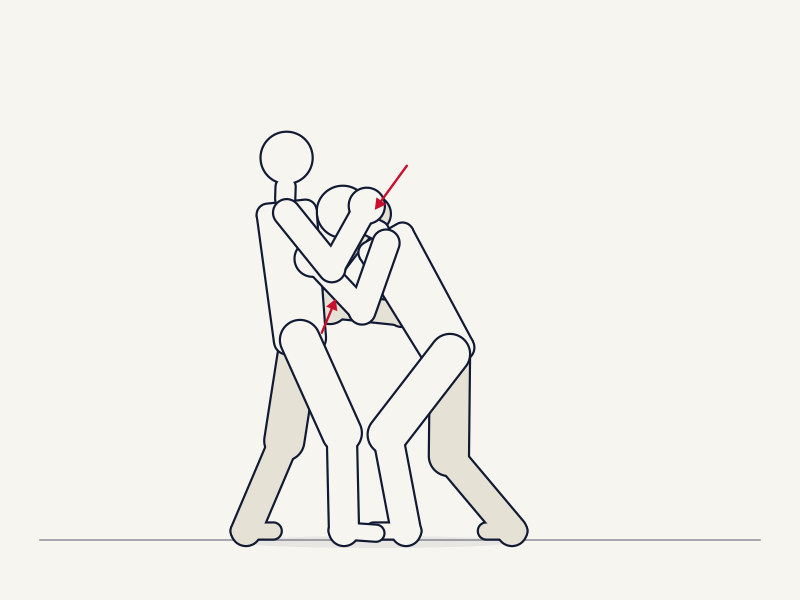
The clinch is the part of Muay Thai that kickboxing removed and that most UK beginners meet last. It's standing grappling: two fighters holding each other's heads, necks and arms, fighting for position, and throwing knees and elbows from inside. In Thailand it's trained daily, often for an hour at a time, and a good clinch fighter can neutralise a better striker by taking away the space they need. This guide is an introduction, not a syllabus. It gives you the posture, the two grips you'll learn first, and the principles that stop you being thrown around.
The clinch is also where beginners get hurt if they're careless. Read the training notes before you try any of it.
Principle 1: posture wins
Before any grip, stand right.
- Feet roughly shoulder width, staggered, on the balls of the feet, knees bent. You need to be able to pivot and step at any moment. Flat feet get swept.
- Hips forward and under you. If your hips are behind you, you're bent over and your head is available to be pulled down.
- Back straight, head up, chin tucked. The person whose head is upright usually controls the clinch. The person who's bent forward eats knees.
- Elbows in and down. Your elbows are your frames. Elbows out means the opponent's arms go inside yours and you've lost.
If you remember one thing: whoever has the inside position and the straighter spine is winning, regardless of who's holding the neck.
Principle 2: inside position
Both fighters want their arms inside the other's. If your forearms are between the opponent's arms and their head, you can control their head and they can't control yours. If their arms are inside, you're being controlled.
Fighting for inside position is done by swimming: sliding one arm up and over the opponent's arm and driving it inside, then the other. Small, constant movements. A clinch is never static; if you stop moving, the other person is about to do something.
The first two grips
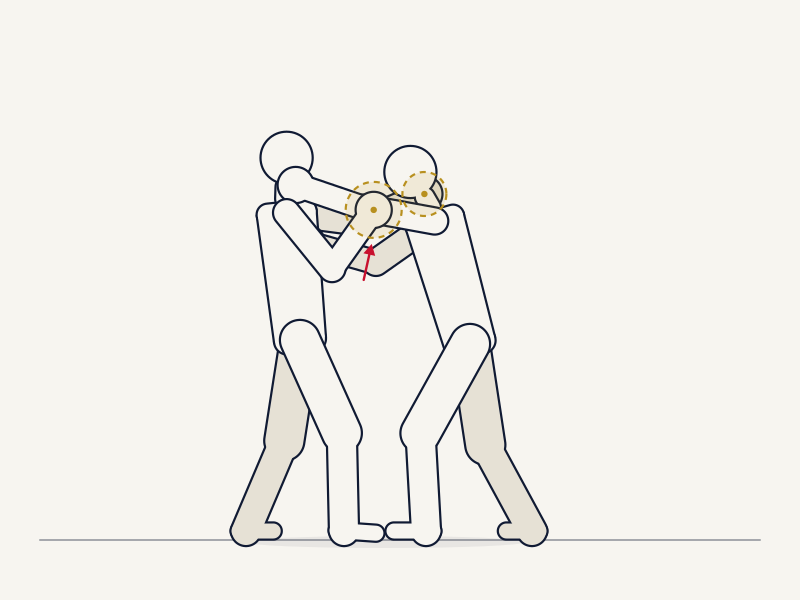
1. The neck tie (single collar). One hand cups the back of the opponent's head, high on the skull, not the neck. The forearm lies along their collarbone or jaw, elbow down, so your arm forms a frame between you. The other hand controls their bicep or forearm. From here you can pull the head down and off to the side, and knee.
2. The double collar ("plum"). Both hands on the back of the head, one over the other (not interlaced fingers; that gets broken), forearms squeezing the sides of the head and jaw, elbows tight together. Pull down and into your chest. This is the grip people picture when they think of the clinch, and it's also the grip Thai fighters use least of all, because it commits both hands. Learn it because the mechanics teach posture; don't rely on it.
Whatever grip you have, pull with your whole body, not your arms. Sink the hips, drive the elbows down, and let your weight do it.
Principle 3: break their balance
The clinch is decided by balance far more than strength. The tools:
- Turn. With a neck tie, step to the side and pull the head around the corner. The opponent's feet cross or stumble; that's when you knee.
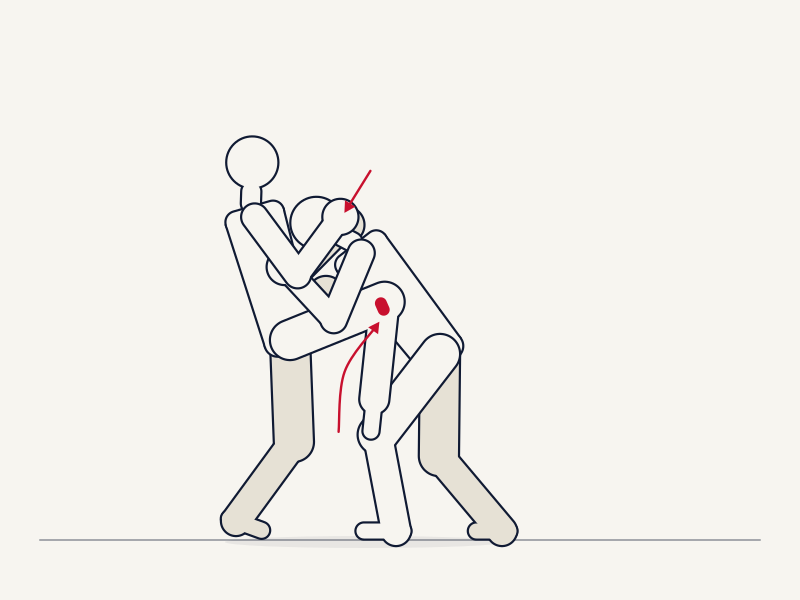
- Pull down and knee. Snap the head down as the knee comes up. The two movements together, not one then the other.
- Push and pull. Push one side, pull the other. The opponent's hips square up to you, which is where your straight knee wants them.
- Off-balance with the hips. Bump the opponent's hip with yours as you turn.
Under traditional Thai scoring, throwing or off-balancing an opponent from the clinch scores well, and a clean dump to the floor scores highly. Falling over yourself scores against you. See how Muay Thai is scored.
Knees from the clinch
The knee mechanics don't change: hip forward, foot pointed, spine straight. The differences are that you're kneeing while holding, so your hands are busy, and you're kneeing at close range, so the straight knee often becomes a diagonal or curved knee to the ribs and thigh. Alternate targets, keep your hips square to the knee, and never knee without some control of the opponent's balance. See knees.
Elbows from the clinch
When one hand comes free, the uppercut and downward elbows are short and available. In the UK, elbows are banned in sparring and most beginner competition, so in training this is drilled on pads, not on a partner. See elbows.
What's legal
Rule sets differ. IFMA amateur rules allow the clinch but the referee breaks it (the command is "yaek") when it becomes inactive, and holding the leg for more than a moment is a foul. Traditional Thai stadium rules allow long clinch exchanges. K-1 style kickboxing allows no more than a moment of clinch. UK interclubs often limit the clinch to a few seconds and ban throws. Know the rules of the event before you build your game around clinching.
Training the clinch safely
- Warm up the neck. Slow rotations and gentle isometrics. Clinch is neck load.
- Start slow. First sessions are about position, not knees. Move, swim, turn, reset.
- Knees are touches in clinch sparring. The knee stops at the thigh or belly pad. Nobody is kneeing hard in a gym clinch round.
- No throws until taught. Trips, sweeps and dumps are technical and they're how knees get twisted. Learn them from a coach, one at a time, on mats.
- No elbows. Ever, in clinch sparring.
- Communicate. If a grip hurts your neck or a partner is cranking, say so immediately.
- Fingernails short, no jewellery, because you're going to have your hands on someone's head.
Thai gyms clinch daily; most UK gyms run it once a week or as part of an advanced class. If yours doesn't run it at all, that's a gap, and a training camp in Thailand is the fastest way to fill it.
Common mistakes
- Bending forward to reach the head. You've given yours away.
- Elbows flared, letting the opponent inside.
- Arm-pulling. Pulling with the biceps instead of sinking the hips and driving the elbows down.
- Interlacing fingers in the double collar.
- Standing flat-footed and being swept.
- Kneeing without control and getting turned.
- Going stiff. A rigid clinch is easy to turn; a relaxed, constantly adjusting clinch is not.
- Treating it as a strength contest. The smaller, better-postured person wins the clinch constantly.
Where to train this
Find a gym with a regular clinch session in the UK gym directory, or spend a block clinching daily under Thai trainers at a training camp in Thailand.
Related guides
- Knees
- Elbows
- Muay Thai stance and footwork
- How Muay Thai is scored
- From interclub to first fight
- Muay Thai vs kickboxing
FAQs
When should a beginner start clinching? When the coach introduces it, usually after a few months of striking basics and once you've got a stable stance. Position drills can start early; clinch sparring should wait.
Is the clinch dangerous? Trained properly, it's one of the safer parts of the sport because there's little head impact. The risks are neck strain and knee injuries from untaught throws. Slow drilling and a coach fix both.
Does size matter more in the clinch? Less than people expect. Posture, inside position and balance beat strength. Weight matters at the extremes, which is why fights are matched by weight.
What's the difference between the Muay Thai clinch and a wrestling clinch? Muay Thai clinching is upright, aims to control the head and off-balance for knees and throws, and doesn't go to the ground. Wrestling clinches aim at takedowns and use lower levels and body locks that would be fouls or bad ideas in Muay Thai.