The Teep (Push Kick): Muay Thai's Most Underrated Weapon
The teep (thip) is the push kick: a straight kick delivered with the ball of the foot that shoves the opponent backwards. It's often called the jab of the legs, and it does the same jobs the jab does: measures distance, interrupts an attack before it starts, and makes the opponent hesitate. It also does one thing the jab can't: with the hips behind it, it knocks people off their feet, which scores highly under every rule set. Beginners tend to treat it as a pushing motion from the leg. This guide fixes that.
Written for orthodox stance. The lead teep (left leg) is the quicker, more common one; the rear teep (right leg) is slower but harder.
Step 1: lift the knee
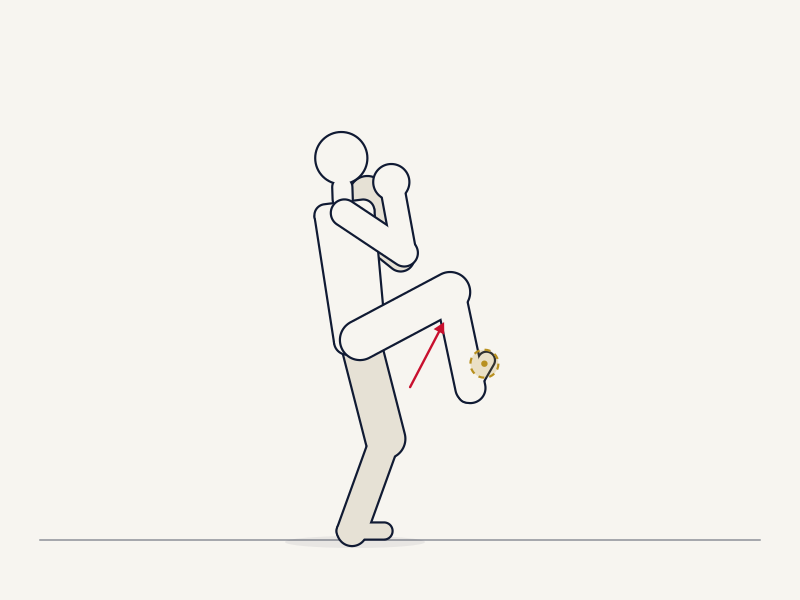
From the stance, drive the knee of the kicking leg up towards your chest. High: the higher the chamber, the more room the hips have to push, and the harder it is for the opponent to see whether a teep or a roundhouse is coming. Keep the standing knee slightly bent and the hands up.
The knee comes straight up, not out to the side. A knee that travels sideways is a roundhouse in disguise and the opponent reads it.
Step 2: pull the toes back
Flex the foot so the toes point up and the ball of the foot is the leading surface. This is the opposite of the roundhouse, where the foot is pointed. Landing a teep with the toes is how toes get broken.
Step 3: drive with the hips
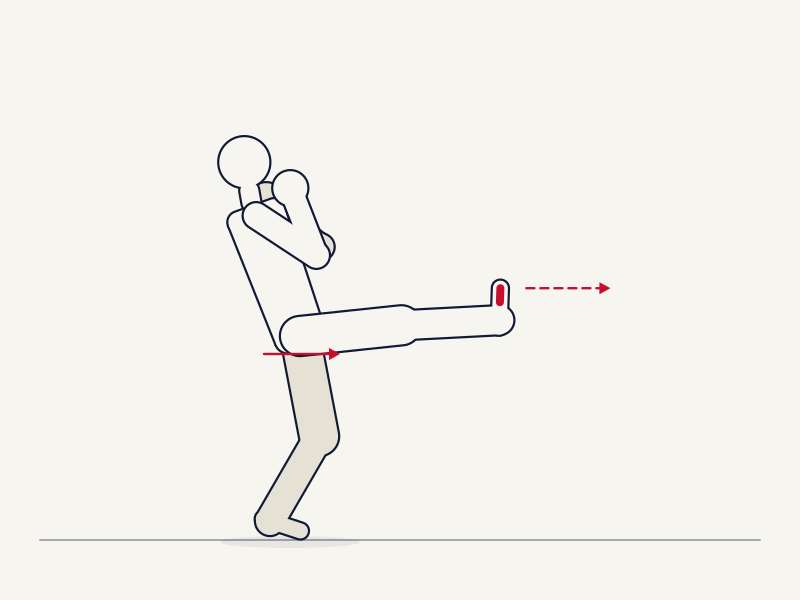
Extend the leg by pushing the hip forward, not by straightening the knee. The standing foot comes up onto its ball and the hips thrust towards the target; the leg follows. The rear foot on a lead teep often pivots a little outward to let the hip through. A lean back of the upper body is normal on a hard teep, as long as the hands stay up and you return upright.
The difference between a teep that annoys and a teep that moves someone is entirely in this hip push.
Step 4: contact and push
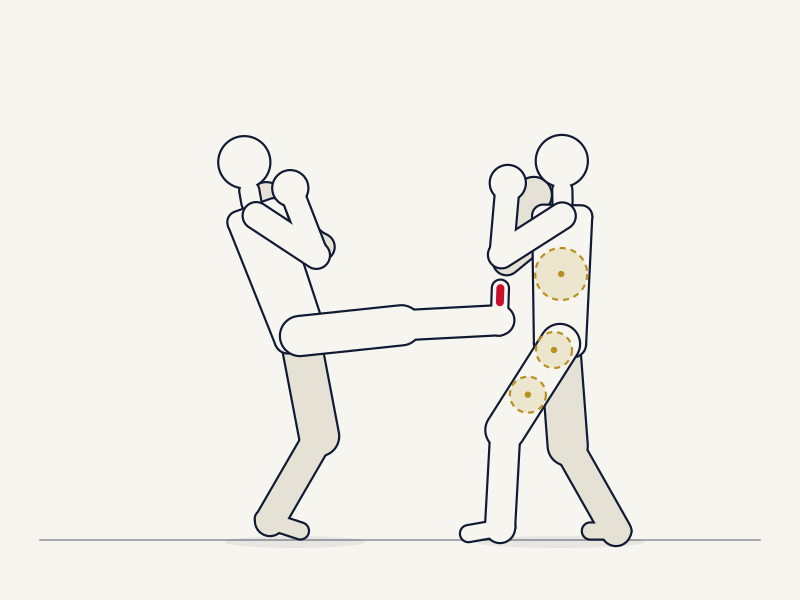
The ball of the foot lands and pushes through. Targets:
- Midsection. The default. Belly and lower ribs. Stops forward movement and, with enough hip, sends the opponent back or down.
- Hip or thigh. Lower, quicker, and useful for stopping a kick before it's thrown: teep the hip of the leg they're about to kick with.
- Chest. Higher, harder to land, used to push an opponent into the ropes.
- Face. A high teep to the face is legal and, in Thai culture, an insult as much as a strike. Not a beginner target.
Step 5: return to stance
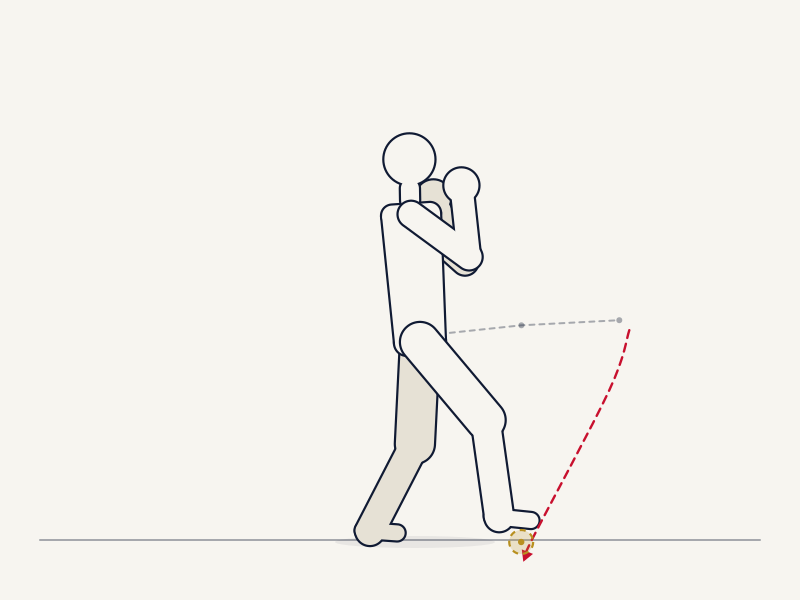
Pull the leg straight back along the same line and plant it. If you throw a lead teep and plant the foot forward, you've closed the distance you just made. Return to where you started, hands up, ready to teep again or to follow with a cross.
The rear teep
Same mechanics from the rear leg, with a stronger step of the lead foot outward to let the hip through. The rear teep travels further, hits harder and is easier to read. Use it when the opponent is already backing up or when you've hidden it behind a jab. Under traditional Thai scoring a rear teep that knocks the opponent off balance is a big score.
What the teep is for
- Range control. If someone walks forward, the teep is the wall they walk into.
- Interruption. Teep as they lift a leg to kick and the kick never comes.
- Setting up. Teep to the body brings the opponent's hands down; the head kick or cross follows.
- Off-balancing. A teep that lands as the opponent's weight is on one foot puts them on the floor. That scores.
- Breathing room. Tired? Teep, step back, reset.
Defending the teep
You'll be taught this alongside throwing it: catch and sweep (catch the foot and push the opponent over), parry (slap the leg across with the palm), or simply turn the hip so it slides off. Be careful with catches in training; a partner with a caught leg and a partner with no control is a knee injury.
Drills
- Knee lifts. Fifty per leg, chamber only, knee to chest, foot flexed. No kick.
- Wall teeps. Slow teeps against a wall with a pad, feeling the hip push, not the knee.
- Teep-cross on pads. Lead teep, plant, cross. Builds the return-to-stance habit.
- Teep the holder as they step. The pad holder steps forward randomly; you teep on the step. Timing is the whole skill.
- Bag pushes. Push a heavy bag with a lead teep, let it swing back, teep it again on the return. Teaches distance and rhythm.
Common mistakes
- Pushing with the leg instead of the hips. Feels like a shove, does nothing.
- Low chamber. The kick becomes a stomp that's easy to catch.
- Toes pointed. Broken toes.
- Hands dropping as you lean back.
- Planting the foot forward after the teep, giving away the range.
- Telegraphing with a lean or a shoulder dip before the knee lifts.
- Teeping with the standing foot flat. No hip, no push.
Where to train this
The teep is best learned on a belly pad or a bag with a coach checking your hips. Find a class in the UK gym directory or a longer block at a training camp in Thailand.
Related guides
- Muay Thai stance and footwork
- The roundhouse kick
- Jab and cross
- Knees
- Checking and blocking kicks
- How Muay Thai is scored
FAQs
Lead or rear teep first? Lead. It's quicker, it's thrown more often, and it teaches the hip push without the extra step.
Why does my teep get caught every time? Low chamber, slow return, or you're teeping from too close. Lift the knee higher, pull the leg straight back, and throw it as the opponent moves in rather than when they're set.
Can I teep with the heel? Some fighters do, especially to the thigh, and some styles teach a heel push to the body. The ball of the foot is the default for beginners because it's safer for the toes and gives a longer reach.
Does the teep score? Under traditional Thai judging, mostly when it moves the opponent or puts them down. Under IFMA rules a teep landed with force scores like any other kick. A teep that merely touches doesn't do much anywhere.