Limits of this page. It is general information from public health sources. It is not medical or dietetic advice and it does not give a diet plan, calorie target or any weight-cutting method. If you plan to compete, have a medical condition, are under 18 or are changing your weight, speak to your GP or a registered dietitian and follow your governing body's rules.
The short answer
Training hard needs enough energy, mostly from carbohydrate, enough protein spread through the day, and enough fluid. A balanced diet usually covers it, and the right amounts depend on you. Anything beyond that, especially losing weight for a bout, needs a professional.
Energy and carbohydrate
The British Dietetic Association (BDA) fact sheet (© May 2026) gives these general carbohydrate ranges by training load, and says they should be fine-tuned for the individual:
| Training load (BDA wording) | Carbohydrate per kg body weight per day |
|---|---|
| Keeping active: 1-2 hours of light to moderate activity, 3-5 times a week, no performance goal | 3-5 g/kg/day |
| 2-3 hours per day of intense activity, 5-6 times a week | 5-8 g/kg/day |
| 3-6 hours per day of intense activity in 1-2 daily workouts, 5-6 days a week | 8-10 g/kg/day |
The BDA also says a meal or snack that is low in fat and high in carbohydrate before training and refuelling soon after help. A camp-style two-session day in Thailand can fall into the higher bands. Do not assume you need the top band; your own routine matters.
Protein
The BDA says strength and endurance athletes need roughly 1.4-2.0 g/kg/day (against 0.75 g/kg/day for non-exercisers), and that a healthy, balanced diet should usually provide it if energy needs are met. It suggests spreading protein evenly through the day.
Fluids
The NHS Eatwell Guide recommends 6 to 8 cups or glasses of fluid a day, and the NHS water page notes you may need more if you are physically active for long periods or in a hot environment. The BDA's practical tip is to drink to "just stay ahead of thirst". In Thailand's heat, that means drinking more often than you might at home; ask your camp about water availability. (Both NHS pages are past their stated review dates, so check for updates.)
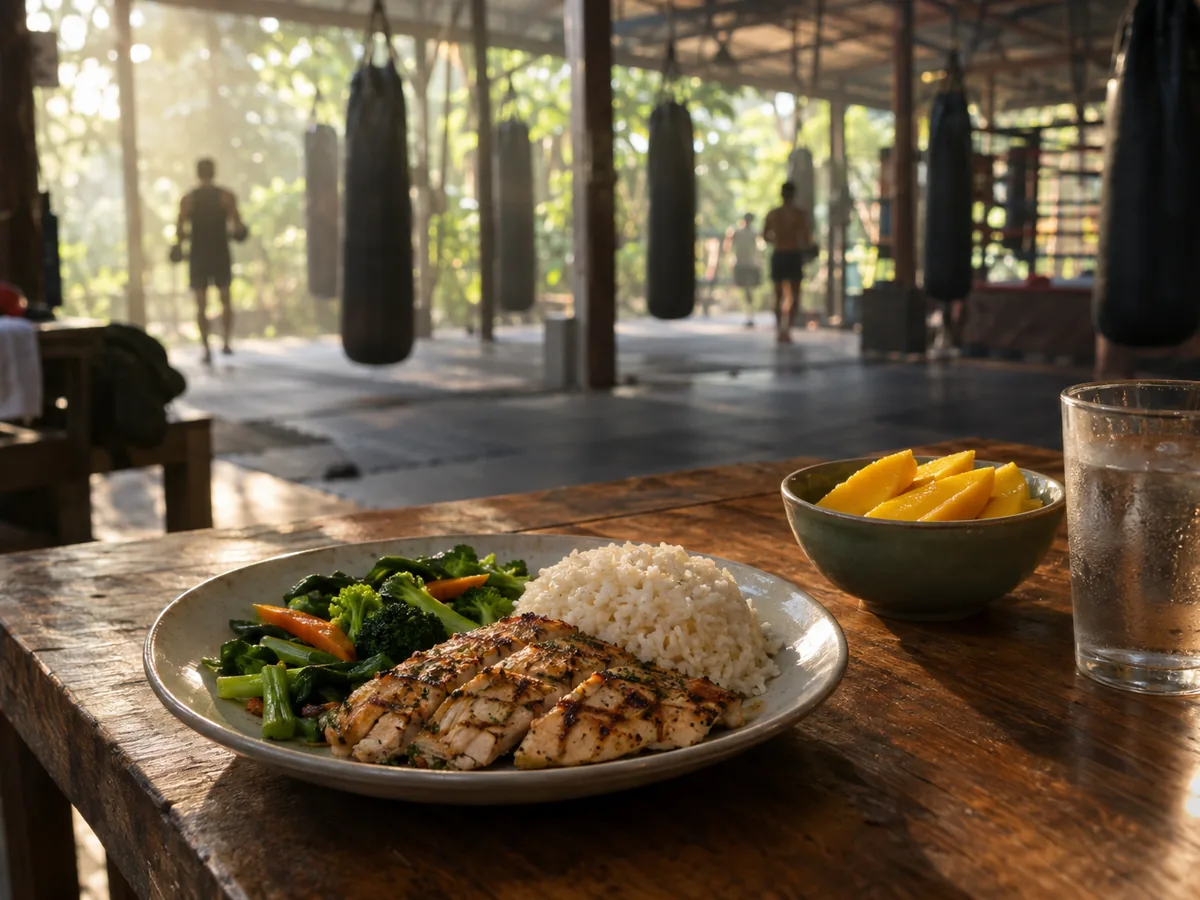
Camp food in Thailand
What a camp provides differs, so read the page (all read 2 Oct 2026):
- Kiatphontip (Bangkok): train-and-stay packages include two meals a day.
- Santai (Chiang Mai): no food provided; local meals are listed at 30 to 50 THB.
- Suwit (Phuket): Thai food (two meals a day) listed as a monthly add-on.
- Sumalee (Phuket): its site has a nutrition station and a "Muay Thai fighters diet" page; we have not reviewed their content.
See training in Thailand and Thailand camp costs.
Weight cutting: what we will not say
The Atlas glossary has entries on weight cut and weigh-in for vocabulary only. Weight cutting can harm health. We will not suggest methods, targets or timelines. If a coach or promoter asks you to make a weight, get advice from a doctor or registered dietitian, check your governing body's rules, and be especially cautious if you are young.
What to do next
- Eat regular balanced meals and drink enough.
- Ask your camp or gym what food is provided.
- If you want a personal plan, see a registered dietitian.
- If you compete, read interclub to first fight.
Sources and dates
- British Dietetic Association: Sport and exercise nutrition food fact sheet (© May 2026, review May 2029) · carbohydrate, protein, fluids, supplements · read 2 Oct 2026
- NHS: The Eatwell Guide (page last reviewed 29 Nov 2022; next review was due 29 Nov 2025, so check for updates) · balance of food groups, 6 to 8 cups or glasses of fluid · read 2 Oct 2026
- NHS: Water, drinks and hydration (page last reviewed 17 May 2023; next review was due 17 May 2026, so check for updates) · fluid guide · read 2 Oct 2026
- Kiatphontip Gym: rates · train and stay includes 2 meals a day · read 2 Oct 2026
- Santai Muay Thai: prices · no food provided, local meals 30-50 THB · read 2 Oct 2026
- Suwit Muay Thai: prices · Thai food 2 meals/day add-on; page has a 2015 exchange-rate note · read 2 Oct 2026
FAQs
What should I eat during a Muay Thai fight camp?
There is no single plan we can give. The British Dietetic Association's sport and exercise nutrition fact sheet (© May 2026) says carbohydrate needs scale with how much you train, protein needs are usually met by a balanced diet, and a plan should be individualised. For a personal plan, see a registered dietitian.
How much protein do I need?
The BDA fact sheet says athletes in strength and endurance sports need roughly 1.4 to 2.0 g of protein per kg of body weight per day, compared with 0.75 g/kg/day for people who do not exercise, and that a healthy balanced diet usually provides enough if energy needs are met.
Can Atlas help me cut weight for a fight?
No. Weight cutting carries real health risks and needs individual medical and dietetic guidance, plus your governing body's rules. We give no weight-cutting advice.
Do I need supplements?
The BDA fact sheet says a varied, well-balanced diet should provide the nutrients and energy required for sport. Talk to a registered dietitian or doctor before using supplements.
What do Thai camps provide for food?
It varies. Kiatphontip's train-and-stay packages include two meals a day; Santai says no food is provided and lists local meals at 30 to 50 THB; Suwit lists Thai food (two meals a day) as a paid add-on. Always read the camp's page.